

- <30
- free
- Not specified
- English, Bosnian, Estonian, Finnish, Italian
Description
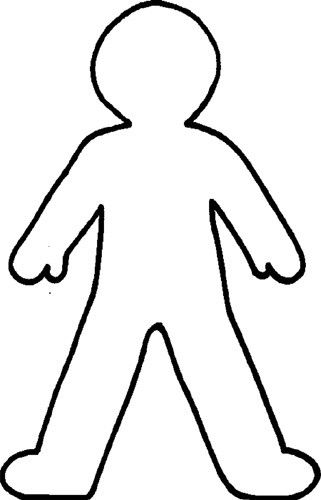
Silhouette Drawing is a group activity where participants are divided into small teams. Each team receives a large sheet of paper with the outline of a human silhouette. The goal is to complete the person by adding different attributes using drawings and text.
Participants fill the silhouette with elements that fit the chosen theme. These can include a large heart with key qualities written inside, tools in the hands, or facial expressions that show personality. The theme can be decided in advance, for example an ideal volunteer or ideal team member. Team members discuss their ideas and add features they feel are important for the theme. Once the drawing phase is complete, each team presents their silhouette to the rest of the group. This allows participants to share perspectives and reflect on the different ideas that emerged.
Method & Activity Information.
- Difficulty: Easy
- Session location: Tampere, Finland
- Test date: 22/04/2026
- Duration: <30
- Costs: free
- Materials used: papers and pens
- Youth participated: 13
- Registration: none
Case Description
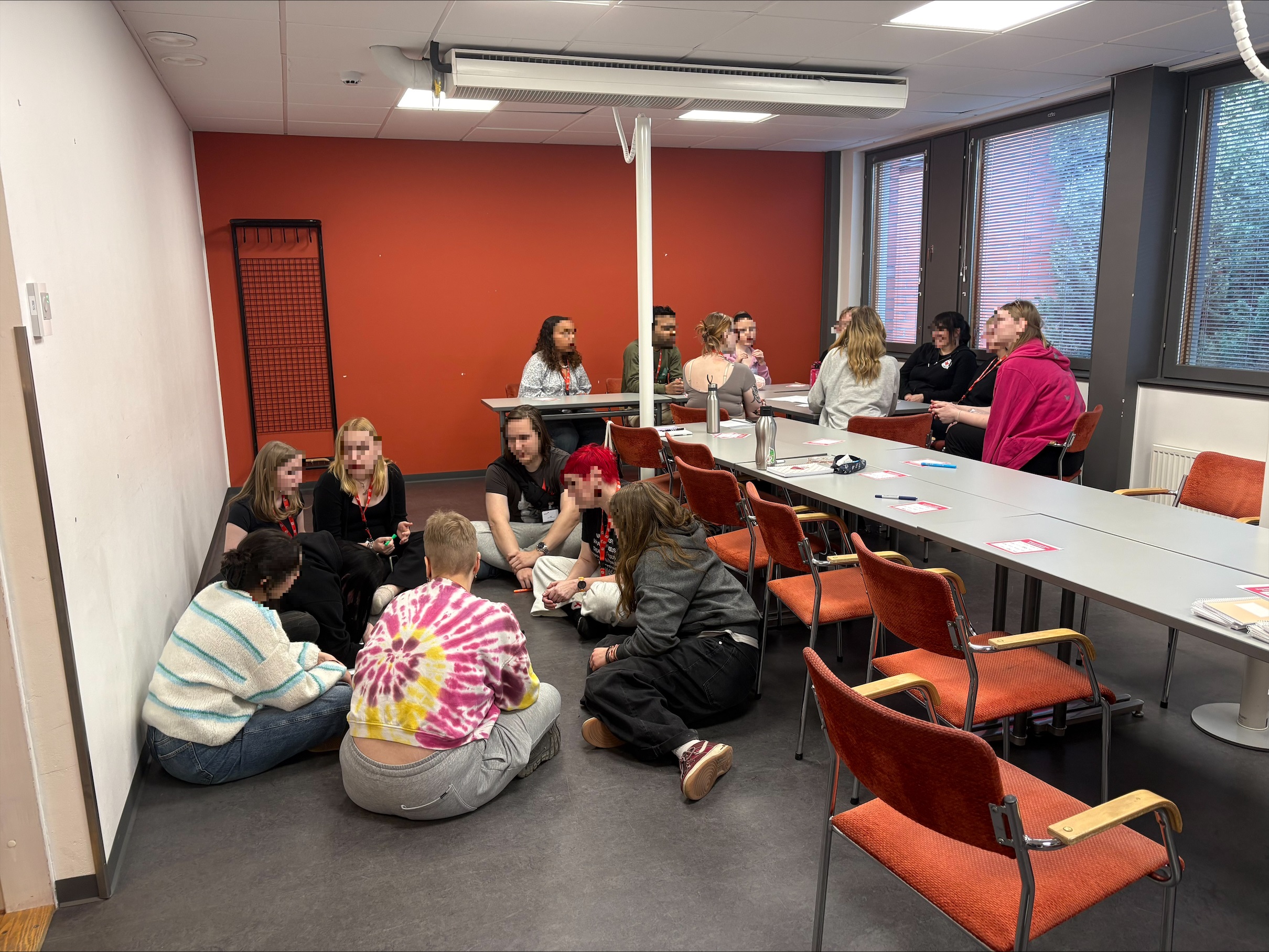
We arranged a workshop with Finnish Red Cross (FRC) volunteers to explore their thoughts about volunteer wellbeing. There was a need for an engaging method to help participants reflect on different motivational factors and how these contribute to wellbeing in voluntary work. The workshop included three minigames, with Silhouette drawing being one of them.
Method Usage
In our case in Tampere, Finland, we used the Silhouette drawing as one of three methods in a workshop focused on volunteer wellbeing in the Finnish Red Cross. The group consisted of young volunteers aged 15-29 and two facilitators. The purpose of the session was to help participants identify, reflect on, and discuss volunteer wellbeing in a playful and inclusive way. We chose this method because of its simplicity and good connection to the theme. Participants got to think of the good attributes of an ideal volunteer and included characteristics like friendliness, fairness, adaptivity, safety, and inclusivity. Their drawings included big ears for listening, first-aid kit in hand, and a heart with Red Cross. The session concluded with a group discussion where both teams presented their silhouettes.
Method & Activity Feedback
Facilitator
Category
Likert-7 AVG
Description
Effectiveness
3.8
Efficiency
6.7
Learnability
4.7
Enjoyability
5.0
Adaptability
6.3
Feedback (recommendation)
3.9
Observer
Category
Likert-7 AVG
Description
Engagement & Participation
6.1
Comprehension & Knowledge
6.2
Game Mechanics & Functionality
6
Participant Experience
Category
Likert-7 AVG
Description
Enjoyment
4.4
Usability
4.8
Learnability
4.5
Recommendation score
4.9
Positive
The rules were simple and it was easy to start. Participants started discussing and drawing immediately.
Everyone got to participate by telling their ideas and drawing.
Negative
Some participants were sitting a bit further from the group, so their participation was less active. However, thankfully in both groups, everyone was asked their opinion.
Suggestions & tips
Arrange the space in a way that there’s enough room for everyone. Drawing on a table might be nicer than on the floor.
How useful was this post
Click on a star to rate it!
Average rating 0 / 5. Vote count: 0
No votes so far! Be the first to rate this post.
We are sorry that this post was not useful for you!
Let us improve this post!
Tell us how we can improve this post
Related methods
120min
unlimited
English, Bosnian, Estonian, Finnish, Italian
World café is a method used for brainstorming multiple ideas. Four to five participants sit around [...]
150min
10+
English
t‑ORG – Understanding Organisations is a complex simulation game designed to help participants experience and reflect [...]