

- 45min
- subscription
- 10+
- Finnish
Description
Maptionnaire is a participatory method for collecting location-specific insights and feedback using interactive, map-based questionnaires. In this method, participants respond to questions by placing markers, drawing areas, or commenting directly on digital maps. This enables the collection of spatially accurate data on perceptions, experiences, and ideas related to places.
The strength of this method lies in its ability to visualize and localize input from respondents, making it especially suitable for urban planning, community engagement, and service development projects that are tied to geographic locations. The method supports both qualitative and quantitative analysis and is accessible on mobile and desktop devices.
In addition to collecting data, Maptionnaire fosters inclusion by giving participants a concrete, visual way to express their thoughts about the environment. This makes it easier to identify patterns, needs, and opportunities that might not emerge through traditional surveys or interviews.
Watch How It Works
Method & Activity Information.
- Difficulty: Medium
- Session location: Hybrid
- Test date: 06/02/2026
- Duration: 45min
- Costs: subscription
- Materials used: Maptionnaire map-based questionnaire
- Youth participated: 20
- Registration: required
Case Description
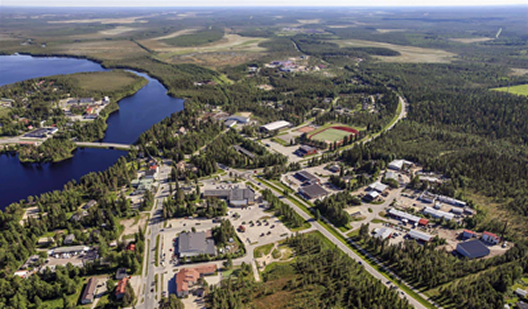
In our case in the municipality of Ranua in northern Finland, we used Maptionnaire to explore how local development projects could be communicated more effectively to young people. The goal was to test how map-based questionnaires could support participation and awareness around the municipality’s ongoing initiatives.
Our test group consisted of ninth-grade students from Ranua’s upper comprehensive school. Using Maptionnaire, we invited the students to give their input on current development themes by placing markers and commenting directly on a digital map of their hometown. This approach allowed the students to express their opinions in a concrete, visual way and connect their ideas to specific places they knew and cared about.
The method proved to be an engaging tool for making local planning more accessible to youth. It also offered Ranua’s municipal staff spatially grounded feedback that can inform future communication and planning practices. The map-based format helped bridge the gap between abstract development plans and the everyday realities of young residents.
Method Usage
Map-based questionnaire is a valuable tool for engaging participants in a visual and location-specific way. It allows users to place comments, ideas, and feedback directly on a map, making abstract topics more concrete and relatable. This strengthens participation, especially in projects related to the built environment or local development, as it connects people's experiences and insights to real places. The tool is easy to use, works across devices, and produces data that is both qualitative and spatially precise—making it useful for planning, analysis, and communication.
Method & Activity Feedback
In this section are youth and facilitator feedback, tips for facilitation, and ratings
Facilitator
Category
Likert-7 AVG
Description
Observer
Category
Likert-7 AVG
Description
Participant Experience
Category
Likert-7 AVG
Description
Positive
One of the key advantages of using Maptionnaire is that it allows young people to clearly see on the map what the project is about and which areas it affects. The municipality’s development plans become easier to understand when they are visualized on a map. In addition, participants can mark places that are important to them, which helps them connect personally to the topic and express their views in a meaningful, location-based way!
Negative
Some challenges in using Maptionnaire include the need for users to have a certain level of digital skills and familiarity with the map-based tool, which may require guidance or orientation. It can also be difficult for participants to access clear and sufficient information about municipal development projects, which limits meaningful engagement. In addition, intangible topics—such as the development of services—can be harder to place on a map, making it challenging to visualize and comment on such issues in a spatial format.
Suggestions & tips
Koliko vam je koristan bio ovaj članak
Kliknite na zvjezdicu da ocijenite!
Prosječna ocjena 0 / 5. Broj glasova: 0
Još nema glasova! Budite prvi koji će ocijeniti ovaj članak.
Žao nam je što vam ovaj članak nije bio koristan!
Dozvolite nam da poboljšamo ovaj članak!
Recite nam kako možemo poboljšati ovaj članak
Related methods
<30
English, Bosnian, Estonian, Finnish, Italian
Crtanje siluete je grupna aktivnost u kojoj se učesnici dijele u male timove. Svaki tim dobija [...]

150min
10+
English, Finnish
The EU Youth Strategy game is a concept created by Lahti city Youth Services DramaLab, a [...]