

- 150min
- free
- 10+
- English, Finnish
Description
The EU Youth Strategy game is a concept created by Lahti city Youth Services DramaLab, a group of young people aged 18-25 (approx.) and the youth workers of DramaLab, on commission by Finnish National Agency for Education (EDUFI), to teach youth about European Youth Strategy and it’s values. The method and it’s materials have been published online for free use by EDUFI.
The game is played in small groups of maximum 5 people. Each group is given a game character, who has their own wants, needs, skills and obstacles in life. Each character and their story also represent some of the EU youth values. The group will go through 1-5 exercises as their character. Each of the exercises presents a situation where the participants have to think, discuss, weigh options and make choices for the character to advance towards their goal. In the beginning the groups pick a character, make up more background and personality for them, and read about the EU youth values associated with the character. Then the groups go through the exercises selected beforehand by the facilitator. In each one, a situation is presented, where the character has to make a smaller or bigger choice, or get through a challenge. The group discusses and writes down ideas and choices they would make. An outcome is not really given to these situations.
The goal is through personal stories and realistic situations to bring the EU youth strategy goals closer to the participant’s everyday life and make them more approachable and understandable. The facilitator will guide the groups through the game and hold a wrap up discussion for them at the end of the game.
Introductions about EDUFI’s Young people, values and EU -materials are published here. Materials and facilitator’s instructions are published here.
Method & Activity Information.
- Difficulty: Medium
- Session location: Physical
- Test date: 15/02/2025
- Duration: 150min
- Costs: free
- Materials used: Printed out character cards (available digitally at Finnish National Agency for Education -website), challenge cards (custom), D6 dice (2 per group), paper, pen
- Youth participated: 12
- Registration:
Case Description
Nuorten Suomi, a Finnish organization promoting youth agency and participation, had gathered a group of 14–18-year-olds as a part of their Eramus+ project (Nuorten Eurooppa), focusing on amplifying young people’s voices in democratic participation by collecting their ideas across Finland and connecting them to European youth policy. As preliminary information about the group, we were told that some of the young people had previously been actively involved in NGO and advocacy activities, and some had not at all. Some presumably also had prior knowledge of the topic being discussed, and some had none. The method had to be chosen so that it would support learning and be interesting to these young people with different knowledge and experience background. The goal was to introduce and familiarize the group with the themes of European Youth Strategy Goals in a way that promotes creativity, critical thinking and experimental learning. To achieve this, we tested a gamified workshop with roleplaying elements. The session was held at Virrat, Finland as a part of the group’s weekend camp.
At Youth Academy, our own interest in testing the method after discovering it was to see if it was possible to create a light-by-design gamified workshop using classic role playing elements. On an idea level the concept seemed great, but we were unsure how it would technically work and if it would have the feel of a game.
Method Usage
The session was an approximately 3-hour workshop which included an introduction to the topic through looking at posters of Youth Strategy, two hours of playing the game and a brief discussion after the game.
The concept seemed like a good exercise on it’s own to learn about the Youth strategy values and suitable for the case. The progression was simple and the characters were well thought out. However, the method didn’t really have the mechanics of a game. We decided to add some gamification elements of our own to add more flow of a story to the method, and the simplest role playing game style dice mechanic to make the player’s choises and the character’s skills actually influence the outcome.
In our method testing at the end of each exercise the players would roll dice to see what was the outcome of the choice they made, and how did it progress their character’s journey towards their goals. They would also check if their character had any positive or negative modifiers to the dice roll based on their skills or personal life obstacles. The facilitator would then narrate based on the discussion, ideas, choices and dice roll, how the situation resolves, like in a table top role playing game. If the dice roll were to fail, the facilitators would, through storytelling, present some options this character might have next and what actions they could take, if this were real life. The intention was not to drive the characters into a corner where the situation is hopeless due to bad dice rolls.
In the end of the game, based on the outcomes during the game, the fasilitator would wrap up the story and tell how close to their goal the character got, and the participants could give their character some suggestions on what steps to take next in life. With this approach the method had more of a feel of a role playing game and it created a story for for the players to participate in.
This experimental learning method encouraged the participants to reflect upon the Youth Strategy goals through concrete real-life scenarios of the characters in the game. The young people were generally active in participating and it seemed like they cared about their character and the situations in the game.
Method & Activity Feedback
They gave feedback that the workshop was fun, educational and meaningful to them. They felt it was easy to participate and they would participate in a similar activity again.
Facilitator
Category
Likert-7 AVG
Description
Effectiveness
6.1
Efficiency
6.5
Clear and understandable to participants, easy to pick up. Does not exactly need active facilitation, but is highly recommended for added learnability and effectiveness
Learnability
6
Creativity, problem solving and co-operation are encouraged and supported
Enjoyability
6.3
Adaptability
6.5
It’s an analog method and the general system isn’t complex
Feedback (recommendation)
6.8
Great participant feedback, adaptability and basis for further developing the method
Observer
Category
Likert-7 AVG
Description
Engagement & Participation
6.2
Interesting game, where everyone was able to choose their level of participation. You get to be creative and work as a team.
Comprehension & Knowledge
6.7
A really good system to learn about more difficult subjects
Game Mechanics & Functionality
7
Participant Experience
Category
Likert-7 AVG
Description
Enjoyment
6.5
Usability
6.3
Learnability
6.3
Recommendation score
6.6
Positive
- The participants demonstrated engagement, enthusiasm, and collaboration during the workshop and the tasks within the game seemed appropriately challenging. According to both facilitator and participator feedback, the game had a user-friendly interface and clear rules and instructions.
- The tasks sparked discussion about different societal themes such as mental health issues and social support systems – the participants seemed to be interested in these topics and the game equipment gave them some concrete tools to reflect these issues.
- The dice system added to the game was a good way to add an element of gamification and engaged the participants even more. The dice system also added a great story-building value to the game and encouraged the players to be more creative with problem-solving.
Negative
- If used as it is, with the published ready-made materials and without active facilitation, the concept remains slightly incomplete. The method doesn’t have much gamified function, the tasks are disconnected from each other and lack a common thread, and the choices made by the players have no outcome. Discussion and reflection on the themes may remain superficial without active facilitation and debriefing.
- There were considerable differences between the activeness and attention levels of the group’s participants. This could potentially be solved by using this method with groups of maximum 4 people.
- The problem-solving tasks given to players could be more clearly tied to the European Youth Goal at hand – an instructor was needed to guide the participants to reflect their choices actively in reference to the Goal.
Suggestions & tips
Make sure to save enough time for the debriefing discussion after the games and before the game for the participants to familiarize themselves with the topic. The facilitator should guide the participants to reflect their observations and ideas in regard to the Youth Strategy Goals. Otherwise, the game’s tasks and contents may feel disconnected from the content of the subject matter – the Youth Strategy Goals. The facilitator should be prepared to take active role in both the game and in the debriefing discussion. Due to the benefits mentioned in the previous paragraphs, narrating the game and supporting participants’ discussion and reflection make the method more effective.
More time can also be taken for the character creation. By coming up with more details about their identity, background and life situation, these factors can be included in the story and the exercises, giving them more dimensions. It may also make the characters more realistic and identifiable to the participants.
Kui kasulik see postitus oli
Hinnangu andmiseks klõpsake tärnil!
Keskmine hinne 5 / 5. Häälte arv: 1
Hääli veel pole! Olge esimene, kes seda postitust hindab.
Kahjuks ei olnud see postitus Teie jaoks kasulik!
Aidake meil seda postitust parandada!
Kuidas saaksime seda postitust parandada
Related methods
60min
20+
English, Bosnian, Estonian, Finnish, Italian
This free training game helps to assist with decision making whilst working as part of a [...]
120min
20+
English
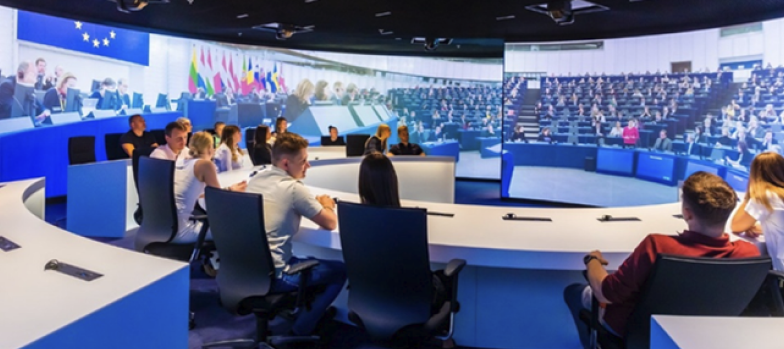
The Europa Experience Simulation Game immerses participants in a realistic simulation of the European Parliament’s decision-making [...]
<30
20+
English, Estonian, Finnish, Italian
This quiz has been designed to give young people a quick and useful introduction to the [...]
150min
10+
English, Finnish
The EU Youth Strategy game is a concept created by Lahti city Youth Services DramaLab, a group of young people aged 18-25 [...]